STIP Issuer Advice Messages
Welcome to the final part of the STIP Mega Guide where we look at issuer STIP advice messages and how they relate to the processing covered throughout the STIP guide.
Background
Advice messages are sent to the issuer's host to indicate that a STIP action occurred and should be recorded. Advices are generated for many, but not all, response codes generated by STIP. I will note the differences as we go.
There are mechanical and requirements differences based on endpoint type (VIP Full Service, also known as single message, versus VIP Authorization Only, also known as dual message), but several core concepts are common.
Why advices matter
When Visa stands in to approve or decline, the issuer needs visibility into those attempts.
- For approvals: the cardholder's open-to-buy must be updated so spending is monitored correctly, and the customer does not draw on unavailable funds (debit) or exceed available credit (credit or prepaid).
- For declines: advices often seem less critical, but there is one important exception. If an issuer's response is late or rejected yet was intended as an approval, and subsequently STIP declines the transaction, the issuer may have already notified the cardholder of an approval by SMS or push message. Without the STIP advice, this creates a poor experience for the cardholder.
We looked at the scenario mentioned in this article in The Journey of a Transaction .

Advice recovery sign-on and sign-off
- Sign on: send an 0800 network-management message to Visa with value 078 in field 70.
- Sign off: send an 0800 network-management message to Visa with value 079 in field 70.
Visa advice-queue purging
Visa allows issuers 15 days (dual message) or 30 days (single message) to recover advices held in the Visa advice queue. After these time frames, the advices are purged.
Non-advice response codes in VisaNet processing
Visa designates certain response codes as not valid for advice generation. These do not produce issuer advice messages:
Let's break advice recovery into dual- and single-endpoint flows to cover the mechanical differences.
Dual message endpoint issuer advices
Message types
0120/0322/0420/0620
Processing requirements
There are no requirements for dual message issuers to respond to advices, but responding has clear advantages. If the issuer does not respond, Visa sends advices at a rate of one every two seconds. Issuers can speed up recovery by responding with the appropriate message type (0130 in response to 0120; 0430 in response to 0420 etc.). The faster the issuer responds, the faster the next advice is sent, and the quicker the advice queue is cleared.
Important point to note – If Dual message issuers elect to respond to advice messages, they must send 00 in field 39 of any advice message when responding.
Strategy for advice recovery
Issuers should recover advices regularly to reconcile customer accounts, especially if they experience network outages or other situations that trigger STIP. Some issuers do this several times per day; others prefer overnight windows when transaction volume is lower.
Be aware of a possible snowball effect if advice recovery is active during a STIP event. If the host or network is struggling, simultaneous advice recovery can consume bandwidth and worsen the situation. Unless the issuer can tightly control recovery rates, pause advice recovery until conditions stabilize.
Single message endpoint issuer advices
Message types
0120, 0220, 0322, 0420, 0480, 0620
Processing requirements
Because single message (SMS) advices are financial, the endpoint must respond to every advice. Failure to respond can create looping situation that can potentially block other advices from reaching the issuer host.
Strategy for advice recovery
No special strategy is required beyond timely recovery and response, since all advices must be recovered and acknowledged.
The importance of prompt advice recovery — an example
A cautionary tale from my experience.
I worked with a bank that saw a large increase in STIP approvals over six months without realizing it. When I asked whether they were performing prompt advice recovery, they were unsure what I meant. Investigation showed that after migrating to a new processor seven years earlier, they had not recovered a single advice.
Because Visa purges unrecovered advices from the queue after 15 or 30 days (depending on endpoint type), those messages were deleted. As a result, the client had no visibility for years into authorizations completed outside its host system.
Final word from the Major!
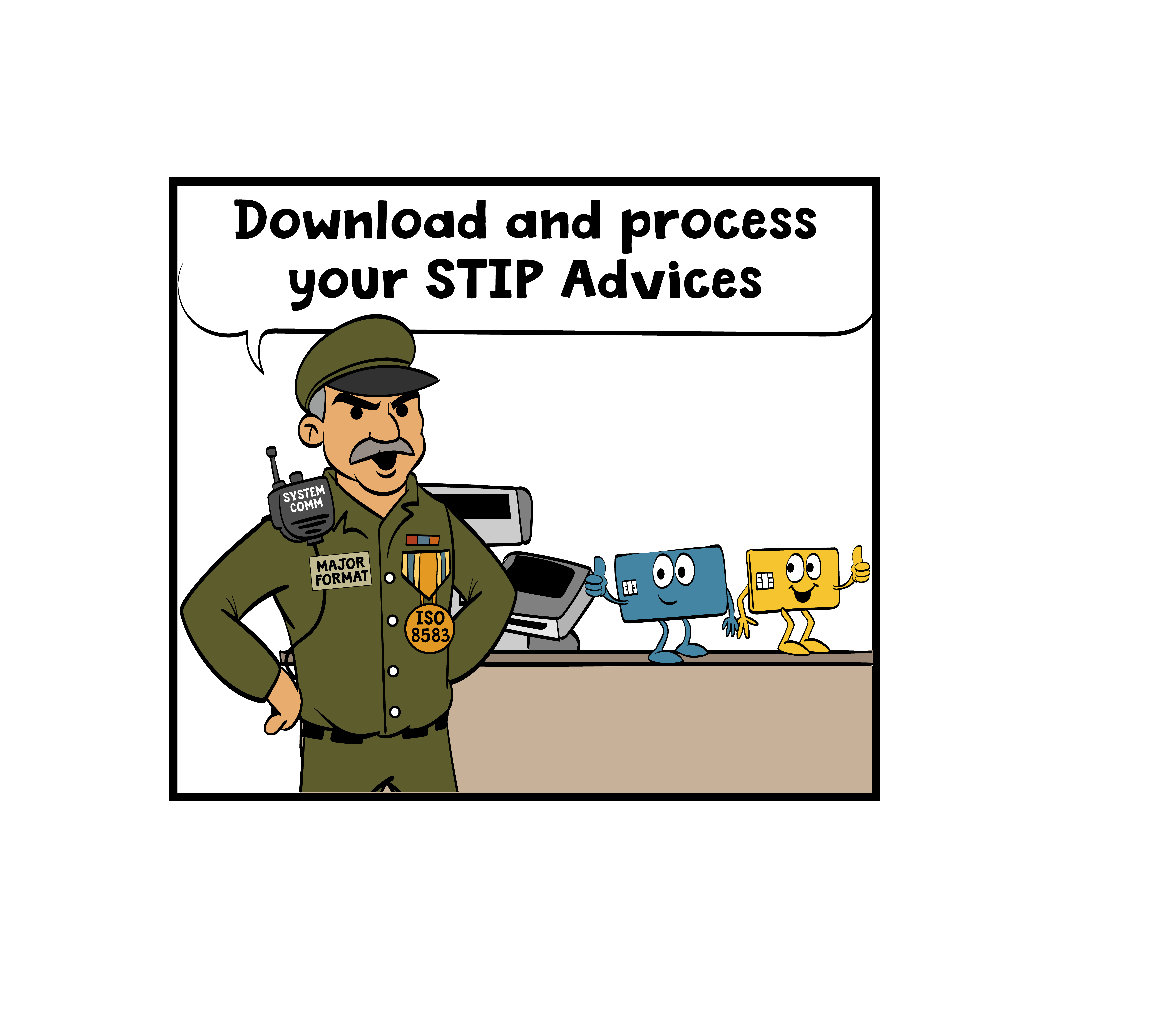
As with any of the subjects covered in my guides, Payment Authorization Expertise can help if these issues are affecting your processing. If we can partner with you, please get in touch.
For help understanding and optimizing your STIP advice recovery and processing— please contact Payment Authorization Expertise. We can identify root causes and fixes to ensure Flawless Transactions. Every Time.